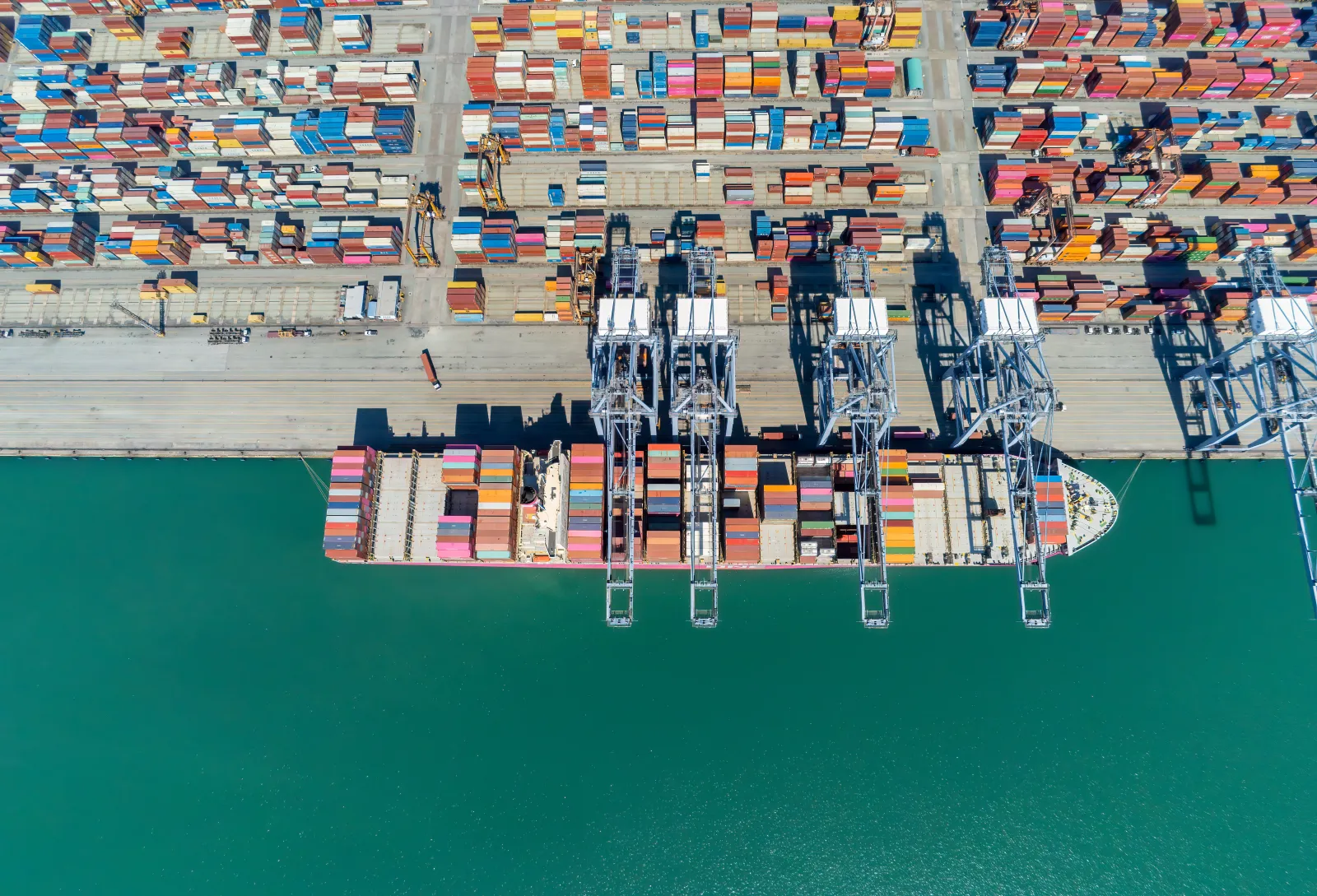

A Turkish operation can be hugely productive: competitive labor cost, EU Customs Union access, large internal market, strong logistics hubs. It also faces volatility patterns foreign HQs sometimes underestimate: TL FX swings affecting input costs, regional logistics bottlenecks (ports, border crossings), seismic risk concentrated in certain industrial belts, and tariff/non-tariff trade interactions with the EU. Supply chain resilience is the discipline of preparing for these in advance rather than reacting to each shock. This guide covers the operational and ERP-layer practices that move a Türkiye-based subsidiary from reactive to predictive.
Note: Trade rules, tariffs, and customs procedures change frequently. Always confirm with your customs broker, trade counsel and CPA before structuring sourcing or pricing decisions.
Five resilience domains
1. Currency volatility
The TL has been highly variable for years. Imported inputs in EUR/USD have direct cost exposure; export revenue in foreign currency is a natural hedge but not for purely domestic-sales businesses.
Practices:
- Multi-currency BOM costing (input cost stored in source currency, translated for reports)
- Standard cost vs actual cost variance reported in both TL and group currency
- Hedging policy if exposure is material (forwards, options), coordinated with HQ treasury
- Pricing rules linked to cost (e.g., re-price when input cost moves >X%)
ERP capability needed: multi-currency item master, FX-aware cost roll-up, pricing engine triggered by cost change.
2. Supplier concentration & geographic risk
The 1999 and 2023 earthquakes put much of Türkiye's industrial heartland at meaningful seismic risk. Concentration of critical inputs in a single region is fragile.
Practices:
- Map supplier base by geography
- Identify single-source critical items and qualify backup vendors
- Build inventory buffers for items with long lead time and high seismic exposure
- Maintain supplier health monitoring (financial, operational, certifications)
ERP capability needed: supplier master with geographic data, single-source flags, lead time tracking by supplier, alternative vendor library.
3. Logistics & customs
Turkish exports and imports use a mix of road (most volume to EU), sea (bulk), air (urgent), and rail (growing). Each has different risk profiles. Customs Union with the EU simplifies many EU-Türkiye flows but does not eliminate documentation, and certain product categories (agriculture, services) lie outside.
Practices:
- Mode mix by item value and urgency
- Customs documentation standardized in ERP (HS codes per item, country of origin, certificates required)
- Free zone usage for re-export or processing trades
- Carrier API integration for real-time tracking
ERP capability needed: structured shipping master data, customs document templates, transit tracking, multi-modal cost comparison.
4. Dual sourcing & nearshoring
HQ teams increasingly want regional resilience: not putting 80% of supply through one country. Türkiye benefits when seen as diversification (vs China, vs intra-EU), but the same logic means Türkiye needs its own dual-source plans.
Practices:
- For top-spend items (Pareto top 20%), maintain 2+ qualified vendors
- Annual sourcing review with explicit single-source justification
- Pre-qualified emergency vendors (faster activation in shock)
ERP capability needed: bid management, supplier scorecards, contract repository, RFQ workflow.
5. Demand visibility & flexible production
Resilience isn't just supply side: demand also moves (currency-driven export surges, sudden domestic shifts). Production must respond.
Practices:
- Sales forecast (S&OP) updated monthly with cross-functional input
- Capacity reserved at 75-85% nominal so sudden orders can be absorbed
- Make-to-stock vs make-to-order policy per product line, reviewed quarterly
- Inventory positioning by ABC + XYZ analysis
ERP capability needed: S&OP workbench, capacity dashboard, inventory positioning rules, MRP that respects them.
Common gaps in mid-market Türkiye operations
1. Single-source acceptance "We've used this supplier for 8 years, they never let us down", until they do. Single-source items concentrate risk silently.
2. Untracked lead times Suppliers say "2 weeks" but actual data shows 18 days average with high variance. ERPs that don't track this make MRP unreliable.
3. Static safety stock Safety stock set in 2022 with last review never. Demand and lead time changed; buffer policy didn't.
4. Manual customs documentation Each shipment re-types HS codes, certificates, declarations. Errors and delays accumulate.
5. No FX policy Procurement buys whenever needed, accounting books at the day's rate, no one is monitoring exposure or hedging.
6. Reactive demand handling Export order arrives, production is full, expedited freight or missed delivery, both expensive.
A 90-day resilience sprint
A practical sequence to move from reactive to baseline-resilient:
Days 1-15: Spend analytics. Where does money go (Pareto top 20% suppliers and items). Geographic concentration map.
Days 15-30: Single-source identification and risk classification. List of items needing dual-source qualification.
Days 30-45: Lead time and supplier performance baseline (90-day rolling actual vs commitment).
Days 45-60: Safety stock recalibration based on demand variance + lead time variance + service-level target.
Days 60-75: Customs and shipping data standardization in ERP. Carrier API integration for top routes.
Days 75-90: S&OP cadence start. Monthly cross-functional review. First demand plan published.
ERP capability checklist
- Multi-currency item costing with FX-aware roll-up
- Supplier master with geographic and risk attributes
- Lead time tracking (planned vs actual)
- Single-source and alternate-vendor flags
- Customs document templates and HS code library
- Carrier API integration
- S&OP workbench
- Safety stock policy engine (configurable per item)
- ABC/XYZ analytics
- Supplier scorecards
Birasyo's resilience posture
Birasyo ERP includes:
- Multi-currency BOM and cost management
- Supplier master with geographic + risk attributes
- Lead time tracking and supplier performance scorecards
- Customs document templates (Turkish + English)
- Carrier API integration patterns (major domestic and international carriers, plus customs broker connectivity)
- S&OP workbench (rolling 18-month plan with cross-functional review)
- Configurable safety stock policy per item
- ABC/XYZ analytics dashboard
If you're standing up or hardening Türkiye operations and want a focused review, book a session and we'll examine your supplier concentration and produce a resilience roadmap.
Sources
- T.C. Ministry of Trade: customs and trade procedures
- TÜİK (Turkish Statistical Institute): trade statistics
- AFAD (Disaster and Emergency Management Authority): seismic zones
- World Bank Logistics Performance Index
Related reads:
Share this post on LinkedIn
The title, summary and hashtags are copied to your clipboard and the sharing window opens. Paste (Cmd/Ctrl+V) and post.