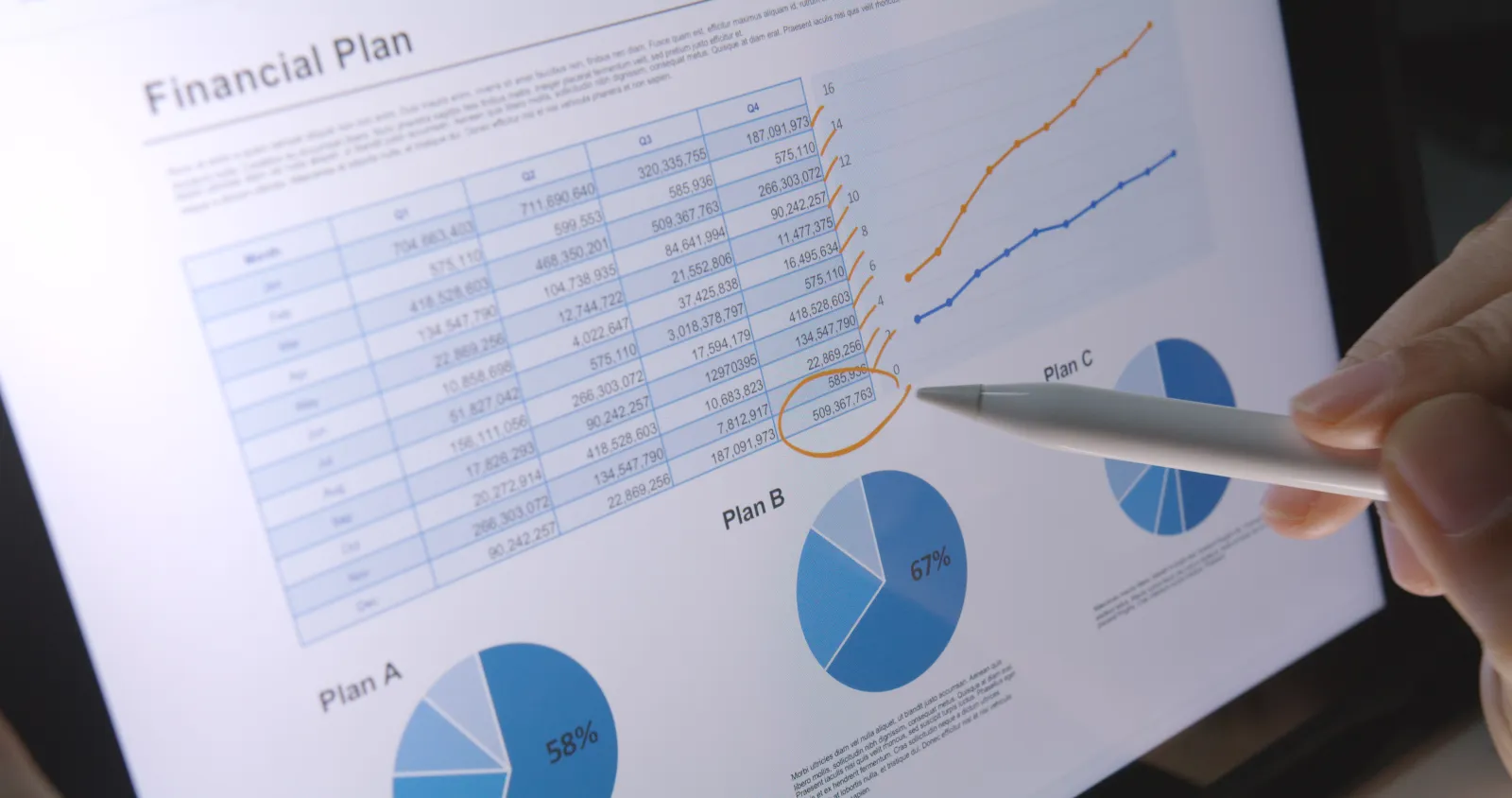

If you operate a Turkish entity exporting to EU, US or MENA markets, you live with a structural reality: you invoice in foreign currency, you bill suppliers in TL and FX, and you report in TL to local tax authorities while HQ wants USD or EUR consolidation. Without a properly configured multi-currency ERP, this becomes a quarterly nightmare of Excel reconstruction, mismatched figures and uncomfortable HQ conversations. Here's what to put in place.
Note: Inflation, exchange-rate moves and hedging products in Türkiye change quickly. Specific numbers below are illustrative and should be confirmed with your CFO and treasury bank for your exact configuration.
The four currency layers an exporter has to manage
A typical Turkish export-oriented mid-market company juggles four currency contexts simultaneously:
- Local statutory: TL for VAT returns, payroll, tax provisional payments
- Operational: TL for domestic supplier invoices, EUR/USD for export invoices
- Reporting / management: depending on HQ, often USD or EUR for consolidation
- Functional: under IFRS the entity's "functional currency" might be assessed as TRY or non-TRY based on cash-flow patterns
Your ERP needs to handle all four cleanly. Conflating them creates errors that compound monthly.
What "multi-currency" actually means in an ERP
A serious multi-currency ERP supports:
Daily exchange-rate import
- Auto-import from TCMB (Türkiye Central Bank) for tax and statutory rates
- ECB / Fed rates for HQ consolidation rates
- Optional: month-end average vs. closing rate distinction
Per-transaction currency capture
- Invoice issued in EUR carries the EUR amount + TL equivalent at the day's rate
- The TL equivalent is what flows to e-Defter and tax declarations
- Subsequent payment in EUR shows realised FX gain/loss
Multi-currency receivables and payables
- One customer can have invoices in multiple currencies; the ERP shows aging in each currency separately and consolidated TL
- Same for vendors
Forward / hedge contract tracking
- A FX forward sold today for delivery in 90 days needs to be tracked as: notional, strike rate, mark-to-market each month
- Hedge effectiveness testing under IFRS 9 if you apply hedge accounting
- Auto-revaluation at month-end
Reporting flexibility
- Generate the same P&L in TL, USD and EUR
- Compare against budget set in functional currency
- Flag when FX-driven changes exceed a threshold (e.g., > 5% TL move)
The 5 reporting traps that mislead foreign HQs
Trap 1: Mixing translation rates Reporting in USD requires a consistent rule: do you translate at month-end closing rate? Daily rate at transaction? Average for the month? The wrong choice can swing reported revenue noticeably in a volatile month. Standardise on a documented policy and never change mid-quarter.
Trap 2: Unrealised FX gains/losses hidden inside operating margin A receivable booked at 35.50 TL/USD that gets paid at 38.20 TL/USD generates a 7.6% gain, but it's a financing event, not operating. Mature ERPs split this out into FX line below operating margin. Less mature ones bury it in revenue or COGS, distorting margin trends.
Trap 3: Dual-rate inventory revaluation Imported inventory bought in EUR, held for 3 months, then sold in TL needs careful FX accounting. If you revalue inventory at end-month FX rates, your COGS gets noisy. If you don't, your balance sheet is wrong. The correct policy is usually weighted average at landed cost in functional currency, but ERP setup must support this.
Trap 4: Intercompany transfer pricing in EUR with local cost in TL Charging your EU parent EUR 100K/month for shared services while your TL costs swing wildly creates transfer-pricing exposure. Your ERP should produce the TL-equivalent of intercompany flows showing whether transfer pricing remains "arm's length" against shifting cost structure.
Trap 5: "We're hedged" without showing the hedge in the ERP Treasury hedges via forwards / options at the bank, but the ERP only sees TL-equivalent of revenue. When FX moves, the P&L looks bad even though the hedge offsets the loss in cash. Linking hedge contracts to underlying exposures in the ERP makes the offsetting effect visible in management reports.
Practical TL volatility patterns for 2026
Three operational patterns Turkish exporters increasingly adopt:
1. Natural hedging via supplier matching Match EUR-denominated input costs (imported materials) against EUR-denominated revenues. Reduces net FX exposure without paying for derivatives. ERP should compute "net FX exposure by currency" automatically.
2. Rolling forward hedges for export receivables For each export invoice, sell forward at issuance date matching the payment terms. Locks in the TL equivalent. ERP integration with the bank's treasury platform automates the link.
3. Quarterly balance-sheet hedge for net asset position For HQ-reporting purposes, hedge the TL-denominated net assets (so they don't show currency translation losses in consolidation). This is treasury rather than operations, so the ERP should provide the position size monthly.
What to ask any candidate ERP
- "Show me a P&L in TL, USD and EUR side-by-side for the same month"
- "Demonstrate booking an invoice in EUR, paying it 90 days later, and showing the realised FX gain in a dedicated line"
- "Walk me through hedge contract recording and month-end revaluation"
- "What's the daily TCMB rate import process? Does it run automatically?"
- "How do you handle inventory revaluation when bought in EUR, sold in TL?"
If any of these answers involve "Excel" or "manual journal entry," you're not ready for serious export operations.
Birasyo's approach
Birasyo ERP ships multi-currency as standard:
- Daily TCMB rate import (overnight); ECB and Fed rates for management reporting
- Each transaction stores native currency + TL equivalent + (optionally) USD/EUR translation
- Realised and unrealised FX gain/loss on dedicated GL accounts
- Forward contract module with mark-to-market revaluation
- Multi-currency aging reports and consolidated cash flow forecast
- Month-end TL/USD/EUR P&L generated automatically
- Configurable functional currency policy (consult with your auditor)
If you operate a Turkish export entity and want a focused review of your multi-currency setup, book a session and we'll walk through your specific volume, currency mix and HQ requirements.
Sources
This article references general practices. For specific regulatory or tax positioning consult your auditor:
- TCMB exchange rate publication: tcmb.gov.tr
- IFRS 9 Hedge Accounting Standards
- IAS 21 The Effects of Changes in Foreign Exchange Rates
Related reads:
Share this post on LinkedIn
The title, summary and hashtags are copied to your clipboard and the sharing window opens. Paste (Cmd/Ctrl+V) and post.